
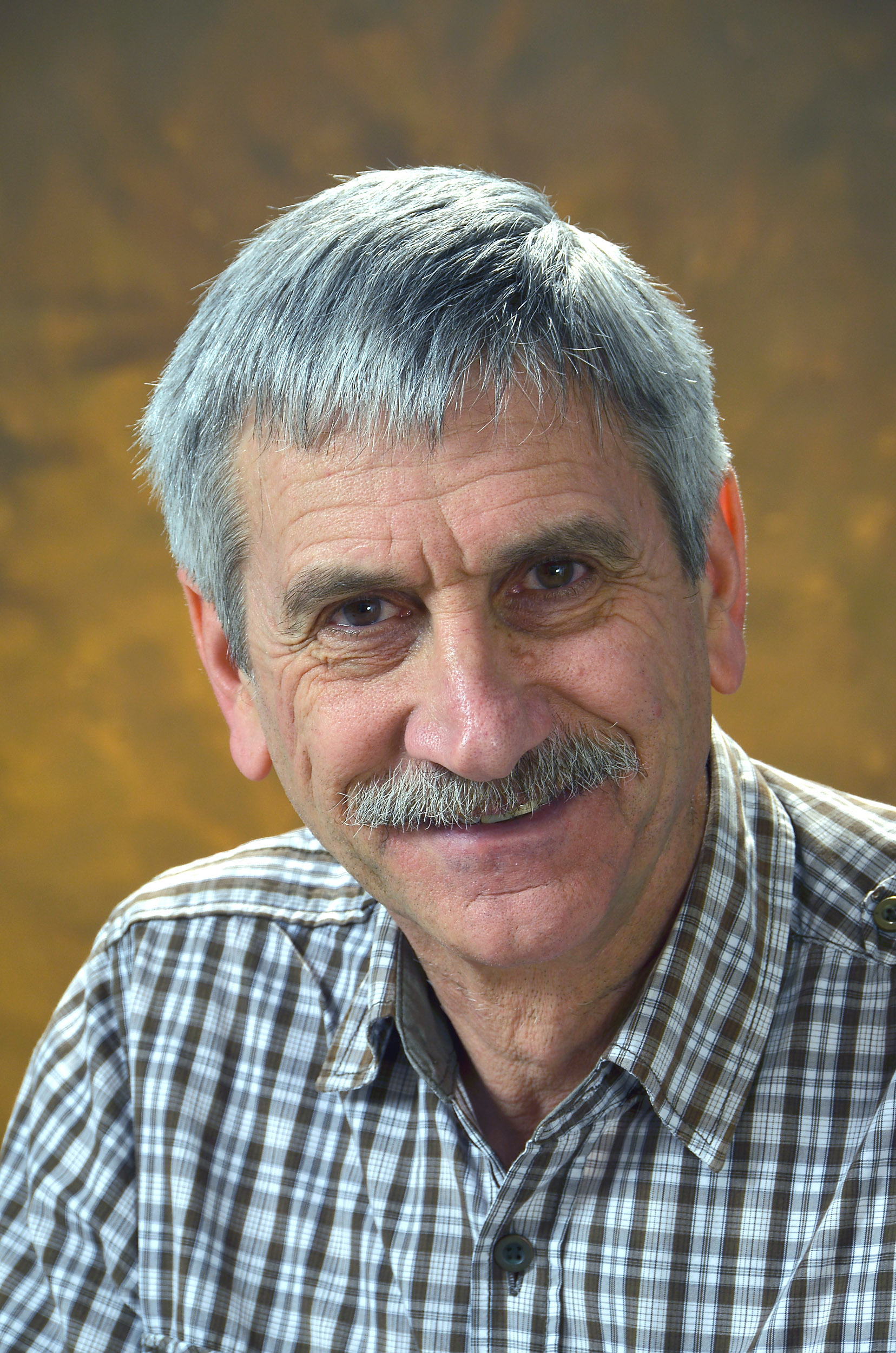
About Me
My interest in photography started at age 15 and did not change for my entire life. I started to work at Nasionale Tydskrifte Beperk (Cape Town) and then progress to darkroom assistance during National Service in the South African Air Force, thereafter in the Department of Agricultural Technical Service (now the ARC), followed by head of photography at the Media Centre of the University of Stellenbosch. After closure of the section, I did aerial photographic surveys for 11 years, piloting and shooting at the same time with the help of 2 Hasselblad ELM cameras and the valuable GPS. This was followed by 10 years service as head of digitisation at the National Library of South Africa, Cape Town campus.
A highlight of my career was the initiation and organising of the first ever national Conference on Applied Photography, aimed at photographers employed by government and semi-government departments, held at Stellenbosch University in 1987. I also had my share of opportunities to photograph VIP’s in my life such as Margaret Thatcher and Dr James Watson who was an American molecular biologist who co-discovered the structure of DNA in 1953.
As a result of the technical nature of photography during working hours and stress due to constant deadlines, being a member of a photographic Society was the only way I could explore the more creative aspects of photography and enjoy it very much. At age 15, I joined the former Paarl Photographic Society and at age 20 Helderberg Photographic Society. PSSA membership started when I was 17 and which lasted for 53 years. Some highlights while being a member was my involvement with the honours judging and being on the National Board which was a good time of my life, meeting many good members and friends. Another highlight for me was the successful Associateship application from the Royal Photographic society. To be awarded a Fellowship of the Royal will always be my dream, but finances are not in favour of such an application due to our current weak exchange rate.
My search and hunger for knowledge in the photographic field, remain until today and started when I bought my first copies of the Time-Life series on photography at age 15. Photographers featured in these publications, motivated me to get to the top of technical perfection, a much needed characteristic for the type of service we needed to provide for researchers at the university.
A second highlight of my career was discovering a reference to my research done for my Higher Diploma in the publication of Peter Palmquist “Photographers: A Sourcebook For Historical Research”. My project documented the professional photographers in Paarl during the period from 1871 to 1960. Only 5 names of South African authors were part of this publication.
Some years ago I came across a quote by Richard Avedon (1923-2004), the well-known fashion photographer which, I thought, is exactly how I feel about my life’s work. “And if a day goes by without my doing something related to photography, it’s as though I’ve neglected something essential to my existence, as though I had forgotten to wake up. I know that the accident of my being a photographer has made my life possible”.
My conclusion: Yes it is true, I’ve never worked a single day in my life, work was life…….for me.
Honours received
APSSA (Monochrome Prints) 1979
ARPS (Royal Photographic Society) (Monochrome Prints) 1980
APSSA (Documentary/Literary) 1989
APSSA (Audio Visual) 1999
APSSA (Service) 1999
APSSA Visual Art (Colour Slides) 2003
FPSSA (Three Categories)
FPSSA Audiovisual (2007)
FPSSA (Applied) 2015
Club Membership
HPS 1973-now
Paarl Photographic Society 1968-1974
CTPS 1990-now
Photographic Likes
I like all genres of photography but I do not practise all. Minimalist, conceptual, contemporary and abstract are some of the favourites.
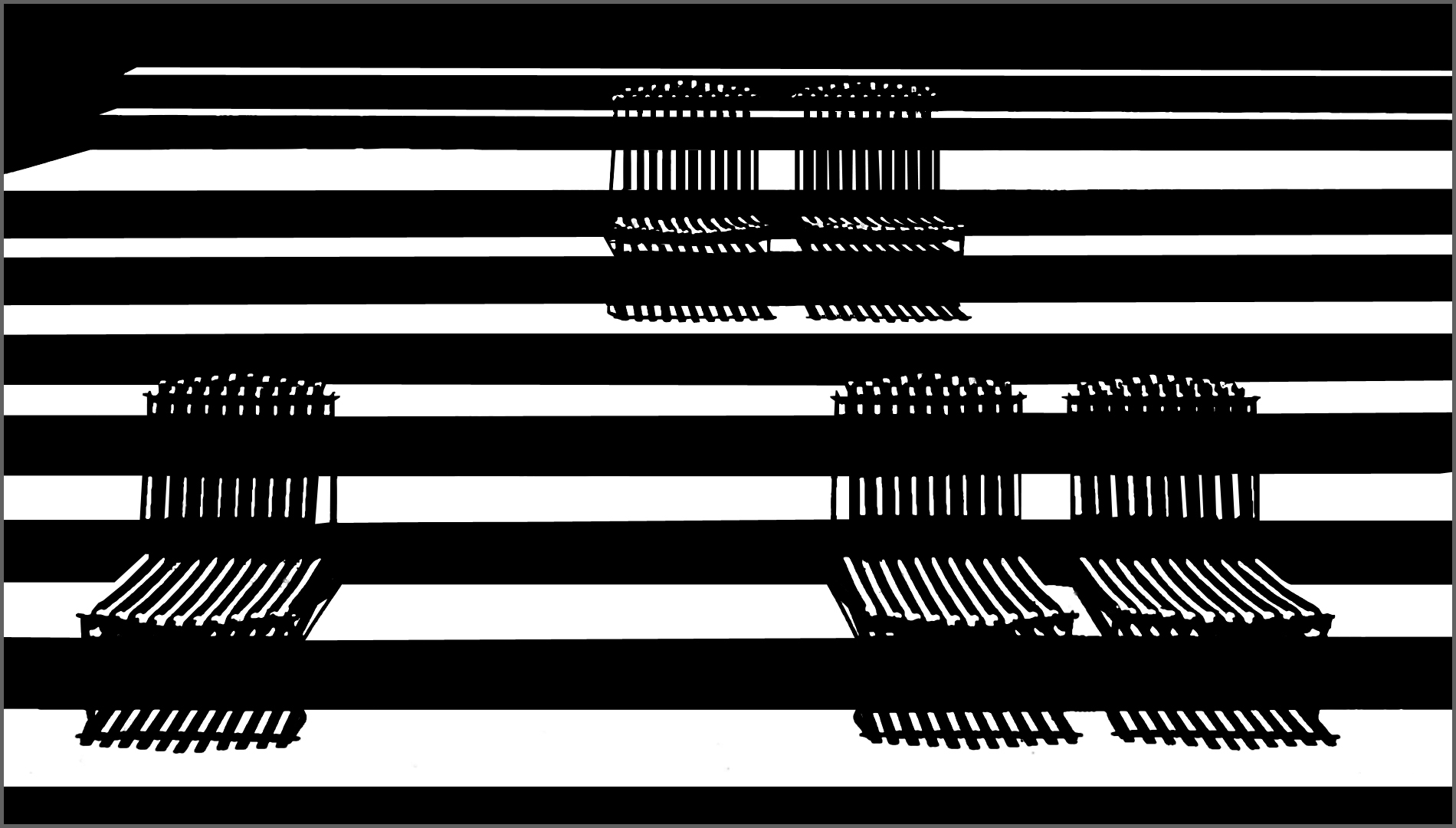
Chairs at Zeitz MOCAA
I always look for the unusual. Often I can “see” the outcome of the image. (Ansel Adams calls this “pre-visualisation”). I saw the lines in all shapes, sizes and angles and decided to use a high contrast conversion to make the final image.

Through my Window
Tell a little bit about image 2.
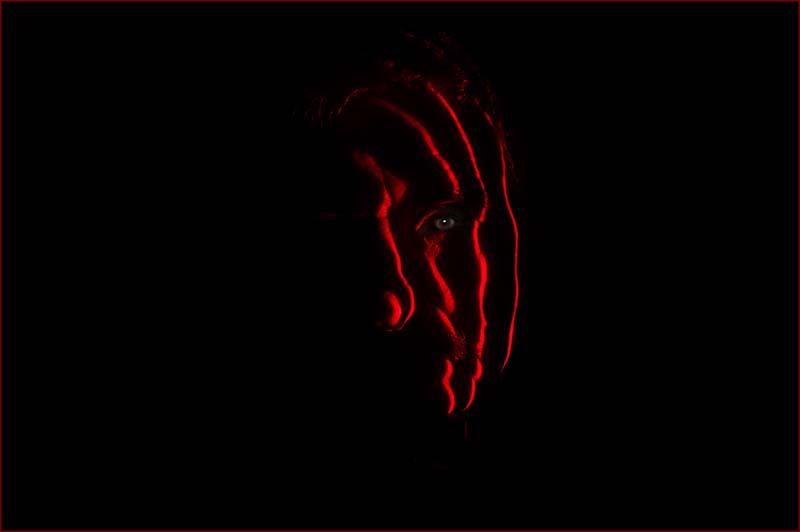
Contoured Portrait
The set subject was “Self-portrait”. The technique that I’ve used is similar to the technique used on aerial photographs to draw contour lines in order to produce maps. The same technique is also used to record the symmetry of the body to identify irregular shapes. While looking in a mirror, I used a red laser to record “slices” of the face, from back to front, each time moving the laser just a few millimetres. Obviously a long exposure of several seconds was needed to capture the light. The eye was lightened in order to orient the image.
 Helderberg Photographic Society