
Scott Kelby writes about ten things he would tell new Lightroom readers.
I got the idea for this post from an excellent post from Rob Sylvan (Rob is one of our Photoshop Help Desk gurus, as well as a Lightroom author and instructor), called “10 Things I Wish I Could Tell Every New Lightroom User.”
Rob’s article ran on Scott Bourne’s must-visit PhotoFocus.com site, and he had lots of really great tips for new users (here’s the direct link). I thought his idea was brillliant, and I sat down and started thinking about what I would tell new users, and then I thought I oughta do a similar post (with a different list of ten).
I was thinking of using a different name for mine, but then Rob wound up coming to to my Boston “Photoshop for Digital Photographers” seminar, and afterward he even gave me a ride to the airport. During that ride to the airport, although we didn’t talk about his post, I felt that somehow there was an implicit permission to run with his idea [
] so with apologies (and full credit) to Rob (and Scott Bourne), here’s my own list.
Divine Composition With Fibonacci’s Ratio (The Rule of Thirds on Steroids)
From the Digital Photography School blog.
Are you a stickler for little details? Well, if you’re a photographer, you had better be. Discovering the rule of thirds is a big milestone for any photographer. Suddenly, you realize that all you ever did before was center your subject right smack dab in the middle of the frame, because that’s where the camera’s focus grid is located. Makes sense right? The rule of thirds took you to new heights in your photographic journey, moving your subject off to one side or another in your frame, or to the top or bottom. But don’t some of these photos look a bit crowded being so close to either side of the frame? Sure it works in some cases, but what if there was still another rule you could incorporate into your photographic repertoire?
Divine Composition With Fibonacci’s Ratio (The Rule of Thirds on Steroids)
Lightroom versus Photoshop versus Camera Raw versus Bridge
From the Earthbound Light blog.
Sometimes the question comes up as to why Adobe makes so many products that overlap each other in function. But sometimes the question gets asked a different way. With all these seemingly similar programs, which should you use? Here’s my take on sorting out what to make of Lightroom versus Photoshop versus Adobe Camera Raw versus Bridge.
10 Ways to Photography Inspiration
From the manualPHOTO blog.
Here are 10 ways to photography inspiration I put together. My general tip is to create limitations for yourself and stick to them.
2010 November Competition Winners
Here are the projected image winners from the November competition for which the set subject was Colour Coded.
Set Subject
| 1 | 2 | 3 |
| Colour Coded Shapes | In the Pink | Dreams of Colour |
| Irmel Dunaiski | Gavin Whiteford | Florian Breuer |
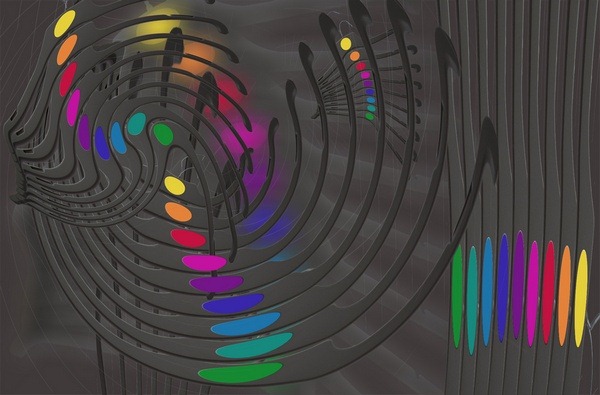 | 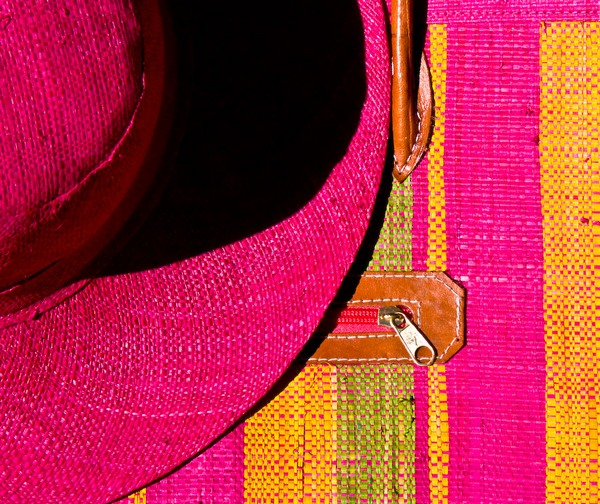 |  |
Open
| 1 | 2 | 3 |
| Red Giants | Fiery Dawn | Golden Glory |
| Florian Breuer | Rosie Burton | Rosie Burton |
 |  | 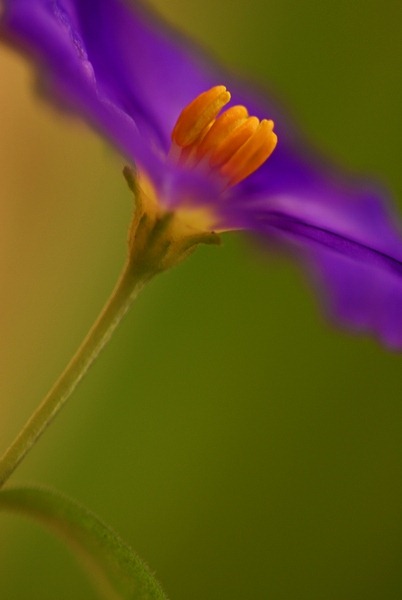 |
The full list of projected image scores can be found in this PDF document
Chromasia Blog
David J. Nightingale’s photo blog not only presents beautiful photographs but acts as a learning tool too.
One of the things I have learned from it is that I can push the boundaries more than I thought I could when processing my images. I came to this realisation via the show the original function on the blog. Often after looking at the photo and thinking it looked great I would hover my mouse over the show the original text and be amazed when seeing the original. Amazed at just how much the saturation and contrast had been pushed from the original. I now know that I don’t have to stop when I think I’m pushing my processing too far, but that I can continue until I realise my creative vision, even if this means that some others may think my image is over-saturated, too contrasty or not realistic.

Beyond this you can learn how the photo was taken by clicking on details about this image, which will display a new window containing not only David’s description of the photo but also a selection of the Exif information that gives details on the camera and lens used, and how they were set up. This window also allows you to leave comments for David; leaving comments on blog posts is always a good idea as it is often the only way the author knows the blog is being viewed or read.

Should you find that you can’t see the details about this image link but see the main site header instead, simply click on hide these links to hide the site header and reveal the blog header that let’s you click through to the details for the image.

If you would like to see more photo blogs included in my Lots of Links posts along with the more usual instructional or informational links I usually post, please leave a comment below.
14 Essential Landscape Photography Tutorials
From the Light Stalking blog.
The theme of landscape photography repeatedly shows up in the most popular posts on Light Stalking and if the proliferation of websites and magazines specifically about landscape is anything to go by, then it is very popular among the wider photography community too. Getting started in landscape need not be a huge exercise – there are literally hundreds of fantastic tutorials available for free online. We have taken the liberty of collecting some of our favorites.
Histograms Deciphered
Have you ever had a look at the histogram on your camera’s LCD and wondered what it all means? It often seems like your camera is speaking a different language altogether. Luckily, you don’t need a degree in computer science to figure it out. Here are some basic things you need to know to get the most out of your LCD histogram.
Fantastic time lapse photography
This appears to be a trailer or preview for a longer film that Tom Lowe is making about the American Southwest. He says about this short video,
This is production footage I shot over the summer for my debut film, "TimeScapes," a modern portrait of the American Southwest. I used Canon and Red MX cameras.
Interclub 2010
The Interclub competition for 2010 was held today in Hermanus. Helderberg Photographic Society didn’t win this year but we placed third behind Fish Hoek (1st) and Cape Town (2nd); there were eight clubs taking part. We did however take the honours for highest total score in projected images.
Congratulations to all our members that had works entered in the competition.
 Helderberg Photographic Society