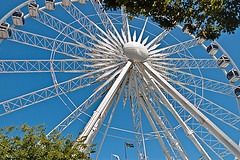
Wheel of Excellence: Last Week

Under the WheelThe Wheel of Excellence at the V&A Waterfront will cease operating at the end of February before being taken down and moving elsewhere.

So if you’ve been putting off photographing it or riding on it, now is the time.

For details of operating hours and ticket prices, visit capewheel.co.za.

Thanks to Paul of the Cape Town Daily Photo photoblog for the reminder.

The Basics of RAW files {and what to do with the darn things}

Digital Photography School published an article saying

Raw. It’s the ultimate test of someone’s acceptance of your status as a professional because it’s one of the first things that a mildly keen just-starting-out-er will pick up on in their search for photography knowledge. But even though it’s one of the first things you’ll likely learn, it’s also one of the most confusing elements for a beginner.

Read the full article here

When It’s Okay To Break The Rules Of Photography

Digital Photo Secrets writes;

We’ve spent so much time talking about what you should and shouldn’t do in photography that we often forget that there is a time and a place to break the rules. You’ve heard about the rule of thirds before, but did you know that it’s okay to break it every once in awhile? Or what about the assumption that your subject always has to be in focus? Did you know you can create some pretty surreal effects by leaving your subject unfocused?

Read the full article

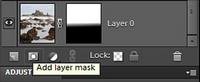
Photoshop Elements 9 Finally Gets Real Layer Masks

elements-9-layer-maskEarthbound Light published an article that starts;

Users of Adobe Photoshop Elements have long envied some of the cool features only available in the full version of Photoshop. Chief among these is true layer masks. There are workarounds to add layer masks to Elements, but Adobe has finally given in and added the real thing to the new Elements 9.

Read the full article here.

2011 January Competition Winners

Here are the projected image winners from the January competition for which the set subject was A Fork, A Hat and a Light Bulb.

Set Subject

123
Forked LightingFeather in Cap VariationA Lightbulb, a hat and a fork
Roger LeeFiona NellMarisa Baschiera
20110112_s1
20110112_s2
20110112_s3

Open

123
BoardwalkSoftlyRun Run Run
Roger LeePaddy HowesGavin Whiteford
20110112_o1
20110112_o2
20110112_o3

The full list of projected image scores can be found in this PDF document

12 Unmissable Tutorials on High Key Photography

High key portrait

High key photography is a technique that can produce some stunning images, but it may not be self evident to many people how to get similar results. The trouble is, where do you start? If you are interested in creating beautiful high key shots, here are 12 unmissable tutorials to get you started and a few shots for inspiration.

Read more: Light Stalking » 12 Unmissable Tutorials on High Key Photography

Image by Jos van Zetten

Camera Lens – A guide to a few of the different types on the market

Newer photographers often confuse terms like “zoom” and “telephoto”, so with that in mind here’s a short blog post brought to us by Canon New Zealand – SLR History that clarifies some of the terms used to describe lenses.

The most important part of what makes an SLR camera so versatile is the lens, and there is a huge variety of lenses available on the market today. Choosing the right lens is important, but it can often be a complicated and confusing process, especially with all the different types available.’ Chromatic aberration’, ‘fixed-focal-length’, and ‘aperture zooms’ are terms which confuse many of us, but with this simple overview about some basic types of camera lenses, their uses, and some interesting facts you may not have known, you’ll be snapping away with your new favourite lens in no time.

Camera Lens – A guide to a few of the different types on the market

Are You Using Your Correct Eye When Photographing?

4930275692_0e90d42330In a blog post Kent Weakley writes

Okay many of us take this one for granted. However, in a recent class, a student asked me “which eye am I supposed to look through the camera’s viewfinder with?” The answer is – your dominant eye. We all have one eye that’s stronger than the other, or that we prefer more than the other.

He goes on to show how to determine which is your dominant eye and explain how those with left eye dominance have an advantage when using a DSLR. Read the full post at the link below.

Are You Using Your Correct Eye When Photographing?

Creative Commons image from familymwr taken by SGT Pablo Piedra.