Whether you’re a novice or a seasoned professional, sometimes we all need our memory jogged. It’s never a bad idea to have some convenient references handy just in case. I have listed what I think are some helpful cheat sheets to keep in your camera bag.
Spyder 3 Express Review
At the club meeting on Wednesday there was some question about calibration of the projector and members’ monitors. It was asked how much the hardware calibration devices cost and I answered that they start in the vicinity of R2,000 for the entry level ones. It seems that I was incorrect; the entry level Spyder 3 Express that is suitable for calibrating CRT monitors and LCD/laptop monitors, but not projectors, is available from Orms for R1,399.

You can read a review of this device that should help you decide if it meets your needs or whether you might need one of the more expensive, more fully-featured models.
UPDATE: Please take note that JJ van Heerden, our technical advisor who runs Picture Works in Stellenbosch has notified me that he can match or better prices from Orms and other vendors. So if you’re thinking of buying a Spyder or any other equipment, it’s a good idea to contact JJ first. You’ll find his contact details under Sponsors in the right hand sidebar.
Three Ways to Control Depth of Field
Depth of field (DOF) refers to the amount of a scene in the “sharp” range. Shallow DOF is typically characterized by heavily blurred backgrounds that you might see in outdoor portraits. Deep focus (opposite of shallow DOF) is typically characterized by tack sharp landscapes with no visible blur.
The most widely accepted method for controlling DOF is aperture, or f-number. This is certainly a feasible and convenient way to control DOF, but there are other factors at play. Just like exposure is controlled by three factors (ISO, shutter speed, and aperture), DOF is controlled by three main factors. Let’s take a look at these three factors and how you can use them to your advantage.
What Makes a Great Photograph
Newcomers to Photography, and even seasoned shooters, are often confused as to what it is exactly that makes a Great Photograph. We all know what a pretty, or cute, or moving photograph is, at least at some emotional, non-verbal level, but we find it hard to define in words what separates the Good from the Great.
Fret not my children, Miserere has spent a few minutes thinking hard about this and has it all figured out for you. A Great Photograph is…
2010 February Competition Winners
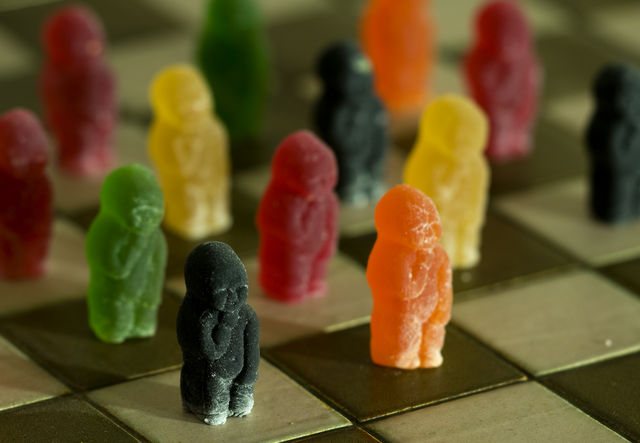
Here are the digital/projected image winners of the February competition for which the set subject was Sweets/Candy.
Set Subject
1
Rainbow Nation Pawns
Chris Joubert

2
Sparkles
Nettie Warncke

3
Swirling Smarties
Rosie Burton

Open
1
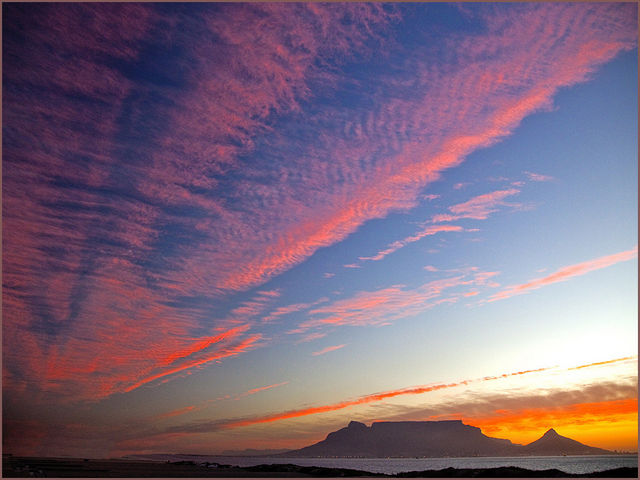
Tafelberg
Neels Beyers

2
Windsurfer
Neels Beyers

3
Cape Town
Marius Swart

The full list of projected image scores can be found in this PDF document
Why ISO Is the New Megapixel
This article expands on some of the information Roger gave at the last meeting, and goes on to explain how the focus of the camera technology race has shifted from increasing megapixel counts to increasing light sensitivity; meaning cameras can shoot at higher and higher ISO numbers, with less noise than ever before.
Competition Meeting Wed. 10th Feb. 2010
More than 50 people arrived for the meeting – quite a few were there for the first time and applied to become members. Bernard welcomed everyone, and asked us to spare a thought for Paddy and Graham Howes, whose farm in Franschhoek was very badly hit by the recent fire.
The outing this month takes place at the Wijnland Auto Museum (entrance R50) which is situated next to the Cape Garden Centre (Exit 34 on the N1). Meet there at 9.30am and bring all your lenses, as well as a hat and a bottle of water!
With reference to the Rally which was to have taken place on Sat. 13th March – please note that it has been moved to Saturday 27th March – meet at the parking area of the Taal Monument in Paarl at 9.30am. Everyone will receive a list of clues/subjects to photograph (only one image per clue allowed!). We are hoping to receive ‘throw-away’ cameras (with film and a certain number of pics), but please bring your normal camera anyway.
Another outing planned, for next month, is the ‘Cape Carnival’ outing on Saturday 20th March – meet at the Adderley Street entrance to the Company Gardens (next to St. George’s Cathedral) at 2.30pm.
Our normal audio-visual evening will be held on Wed. 24th February – everyone is welcome.
The judges for the evening – Mary, Andre, Frank and Gail – had prints, slides and over 100 digital imgages to judge! They moved it along at a good pace – results will be posted separately by Steve.
After tea, Roger Lee gave us a very well thought-out talk on the basics of understanding the technology of digital cameras – we thank him for being willing to give us this lecture, which, I am sure, helped many of us understand things we are too scared to ask!
Next month’s competition set subject is ‘Urban Decay’ … so let’s get clicking!
Photography courses by Roger Lee (HPS Member)
Enjoy Digital Photography
‘Arguably one of the best introductory courses available…’
Whatever camera you have and, whether you are a beginner or a more experienced camera owner, your photography and your enjoyment will benefit considerably from this course.
You will have great fun using your camera in future.
Join over 100 people who have really enjoyed the course.
‘Roger is an experienced photographer and presenter with a very clear, friendly and easily understood style’
The course covers the camera, techniques, what to buy/upgrade, composition, camera to computer files, basic enhancement and what to do with your pictures – prints, albums, internet etc. Everything you need to really enjoy taking photographs and sharing them with family and friends.
Held in Gordon’s Bay, the course is covered in two, three hour modules on Saturday mornings from 9-12, with the next course planned for April 17 and 24.
Each module is priced at R200 per person.
Contact: Roger: 021-856-2176 or botanical@mweb.co.za for all the details. 20 People is the limit on this course.
Memory Card Tips
I don’t know if this has ever happened to you but one of the worst feelings in the world (photography-wise at least!) is discovering that your memory card has become corrupted and you’ve now lost all the photos you recently took. It happened to me on my old point and shoot card but I was really lucky in that there were only about five or six photos on the card and they weren’t particularly important to me.
It can, however, be a disaster to lose your photos before you can remove them from the card. While you can’t prevent all problems, here are some memory card tips to avoid as many issues as possible.