Print photos with date taken or other EXIF data

I use FastStone Image Viewer for viewing images and performing simple edits, resizing, etc. but this tip I just found is not something I’ve tried before. You might find it useful. The tokens shown in step 3 are just an example. Play around with the different options to arrive at your desired result.

  1. Launch FastStone Image Viewer
  2. Open photo directory
  3. Create > Contact Sheet Builder > Caption > click "…" at top right > EXIF DateTime ($Hx) > Date and Time ($H1)
  4. Save the output to a file (PDF, TIF, PNG, GIF, BMP, and JPG supported) or send directly to printer.

From TinyApps.Org

7 Photography Projects to Jumpstart your Creativity

Let’s face it, no matter how much we take our camera out, there’s only so many pictures we can take of our kids, pets, house and garden before we start itching to shoot something else… but what?

Hopefully this list of projects you can undertake will inspire you to find something creative to shoot.

7 Photography Projects to Jumpstart your Creativity

Overberg Photographic Workshop

overberg_workshop

Join Wicus Leeuwner & JJ van Heerden on the
Overberg Photographic Workshop


The workshop is aimed at photographers wishing 
to find a creative way of improving their photography
by using artistic and design principles.
Both Beginners and Experienced Photographers 
will benefit.
The workshop is presented in a relaxed, informal
atmosphere, allowing individual freedom of expression!

Click on the link below to read more about the workshops
www.agape.co.za/overberg

For bookings and further information contact
Johan on 023  6251 593
or e-mail johanvanzijl@telkomsa.net

How to test a lens

How to test a lens | Photographer Inteviews, Portrait, Commercial, Editorial Photogrpahy and Photographic Art – Colours Magazine

Lens testing is fun and informative. While it won’t turn you into a Cartier-Bresson, it will have a visible impact on your photography too: if you understand the way your lenses behave, you’ll be able to make the most of them under all circumstances. For example, you might have one lens that you know to work well across the entire aperture range, and another that’s otherwise OK but starts to break down wide-open at maximum tele. Knowing this, you could make the intelligent decision to use the first lens wide-open for a shorter shutter speed, to minimize camera shake — but stop down the second lens, risking camera shake to get rid of the lens softness, or bumping up the ISO a notch, knowing that the added noise will hurt less than the lens softness.

Start Using Curves in Elements

Start Using Curves in Elements. | Photo Answers

One of the biggest advantages that the full version of Photoshop seems to offer over Elements is access to the Curves palette – and if you’ve used Curves you’ll know just how handy they are for controlling contrast.

What many people don’t realise though is that Curves are in all versions of Elements since version 5. Check out this video lesson to find out how to use them.

CuteCanonCapture Snaps Photographs via USB

CuteCanonCapture Snaps Photographs via USB – Digital Cameras – Lifehacker

I’n not sure that this does anything that can’t be done by the software that comes with your camera but if you’re a Canon shooter, you might want to take a look.

Windows only: Free Windows application CuteCanonCapture turns your computer into a remote trigger for your Canon digital camera.

Provided you’ve got a supported Canon camera (see below), you just plug your camera into your computer via USB, fire up CuteCanonCapture, and you can snap pictures remotely, tweaking exposure, flash, focus, and zoom all from the comfort of your keyboard

Winning Entries From Scott Kelby’s Worldwide Photo Walk Announced!

Photoshop Insider Blog By Scott Kelby » Blog Archive » Winning Entries From Scott Kelby’s Worldwide Photo Walk Announced!

This was incredibly hard. Even harder than I thought.

Last year it was really tough coming up with my finalists and winner, but this year’s judging was more than just four times harder—not just because four times as many people participated—but because the sheer quality of the shots this year was just over the top.

There were so many amazing, intriguing, fascinating, and just fun shots, that it made going from nearly 900 shots down to 10 finalists and one winner incredibly challenging. But, instead of keeping you waiting; let’s get to the winners, and we’ll talk more in a moment.

Newsletter from Cape Photographic Company

Peter Haarhoff of Cape Photographic Company e-mailed this newsletter that may be of interest to members.

Hello Helderberg Photographic Society

I think there is something magical about taking photographs at night, something that is often lacking in normal daylight photographs, but as the sun goes down, it becomes harder to capture stunning images without the proper equipment and techniques.

Here are a few pointers to help you take good night time photographs:

USE LONG EXPOSURES
The key to successful night photography lies in long exposures. The problem with long exposures is that you might move the camera during the exposure, resulting in blurry pictures. The way around this is to use a tripod. I prefer to use a tripod and a cable release fitted to my camera, just to make sure I do not move the camera at all during the long exposure.
If you do not have a cable, or shutter release for your camera, try using the camera’s self timer instead.

NOISE REDUCTION MODE
Use your camera’s “Noise Reduction Mode” to reduce the effect of noise on your photographs, if you are not sure whether your camera has a feature like this, refer to your instruction manual, or send me a email and I will check for you. If your camera does not have a “Noise Reduction Mode”, try using a very low ISO setting. That will also help to reduce noise.

HOW TO USE THE FLASH
As a general rule, I turn the flash off when taking scenic photographs at night. There are some exceptions though- one specific example I can think of is when you want take a photograph of a person, showing beautiful lights in the background. You then need to use your camera’s flash to light up the person, combined with a slow shutter speed to capture the beautiful lights in the background.

TRY TO CAPTURE MOTION
With a long exposure, you have many creative options available, like capturing motion. For example, have you ever wondered how those professional photographers take pictures of cars at night with the lights trailing behind? It’s all done with a long exposure. Try to keep this in mind next time you’re taking a night photo- you don’t have to restrict yourself to still images.

TIP FOR BEGINNERS
Try using your camera’s “Night Time Mode”, this is normally indicated by a half moon, or buildings with stars, or even a flash off icon on your camera. Simply select this mode, place your camera onto a tripod, and…there you go!

INTERESTED TO LEARN MORE…
JOIN THE “DON’T BE AFRAID OF THE DARK” PHOTOGRAPHIC WORKSHOP AT THE V&A WATERFRONT ON SATURDAY 29TH OF AUGUST 2009 FOR ONLY R150 per person

LIMITED SPACE AVAILABLE!

FORTHCOMING PHOTOGRAPHIC WORKSHOPS
29 August 2009 – “Don’t be afraid of the Dark” at the V&A Waterfront
Learn how to take stunning photographs at night with long exposures

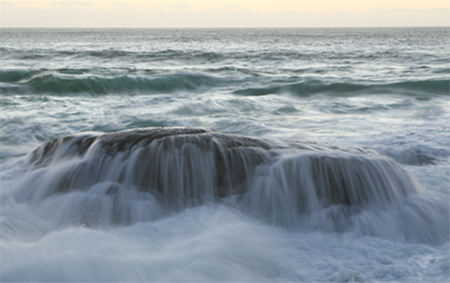
5 September 2009 – “It’s the motion of the ocean” on Blouberg Strand
Learn how to use a slow shutter speed, to capture the blur of moving water

18 September 2009 – “Paint with light” Workshop in Johannesburg
Learn how to take photographs using the ‘bulb’ setting on your camera,
while ‘painting’ interesting patterns using multi-coloured torches

26 September 2009 – “How to take better portrait photographs” in Stellenbosch
Learn the techniques needed for top portrait photographs

PHOTOGRAPHIC DAY TRIPS
Learn how to use your camera, and to take better photographs, on a photographic day trip in the Western Cape. Here are the most popular photographic outings:

TABLE MOUNTAIN & CITY
CAPE POINT & CAPE OF GOOD HOPE
CAPE WINE LANDS
MACRO or CLOSE-UP
WEST COAST FLOWERS
MOUNTAIN PASSES PANORAMIC TOUR
PORTRAIT AND PEOPLE TOWNSHIP EXPIERIANCE
SHIPWRECKS AND LIGHTHOUSES
BAD WEATHER AND RAINY DAYS

A MOMENT IN TIME…

This photograph of the Clock tower, in the Victoria Basin was taken by well known Cape Town photographer Arthur Elliott (1870-1938), probably not much later 1900. The quaint, pinnacled late Victorian clock tower, built in 1883, was the focal point of Cape Town’s harbour, and can still be seen today in the now V&A Waterfront. The photograph was taken with a quarter-plate camera, given to Arthur by a friend.

THOUGHT FOR THE DAY
“Wisdom suggests that you seek the positive in every person and situation and cultivate an attitude of gratitude.”

Keep those cameras snapping, till next time.

Peter Haarhoff

0 8 2 8 5 3 9 9 3 9
photocoach@mweb.co.za
www.capephotoco.co.za