
Despite it being incredibly windy – and later, very cold – quite a few members ventured to the top of Signal Hill – Bernard, Irmel, Paddy, David and Celine, John and Liz, Marius, Caroline, Harry and Susan, Marisa and Neil, Rosie, Kina, and Nettie. Neels was also there with a small group from CTPS. Those who met in the BOE carpark first went to the top of the building to shoot a few cityscapes; after that it was onward and upward to Signal Hill. Lions Head was inundated with climbers carrying torches … they looked like fireflies on the way down later on. Following two huge Golden Arrow busses – who then disgorged their many passengers while blocking the road – was not my idea of fun, but we eventually found some parking and settled down with cameras and tripods. There was a fair amount of dramatic cloud around Table Mountain, and enough interest in the sky to obtain good sunset shots. Some of us spent all our time overlooking the Waterfront where we could make pictures of the Stadium, the lights coming on in the city, and eventually the full moon rising above a bank of cloud. I still am not able to shoot the moon without it looking like a yellow splodge – all I know is that Bernard was doing some amazing stuff with his Nikon! Eventually the cold got the better of us, and we all ran for our cars and a comfortable ride home! Thanks everyone, for making the effort – it was fun!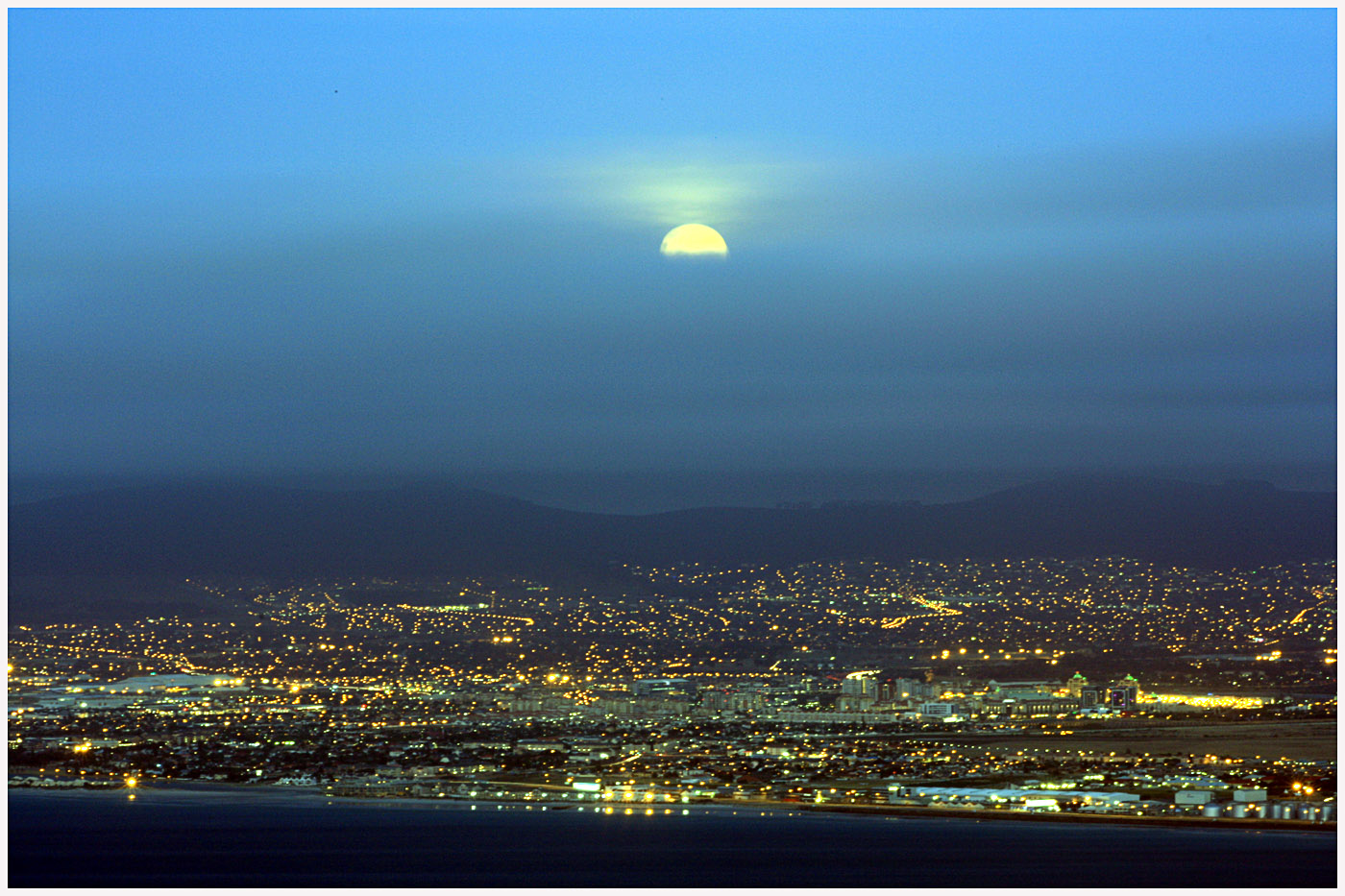


3 Ways to get Better Control of Autofocus
Sometimes autofocus can be really annoying. For some shots it’ll focus on the right part of your subject, but then the very next shot it may choose to focus on something far and away into the background.
Sure, you could avoid this problem by always using manual focus, but autofocus is great when you need to focus quickly or when you’re photographing a landscape and you need to focus on a certain spot in the scene.
Well, autofocus doesn’t have to be annoying anymore, because here are three ways to get better control of it.
Captured Experiences Photo Competition
Captured Experiences Photo Competition – 10 Categories – 120 prizes – and an additional 7 special prizes
Visit any of the 6 Arid Parks in the Northern Cape throughout 2010 and share your special moments in nature with us to win great prizes! Winners of each round will have their photos published in an upmarket hard cover coffee table book, and the finalists will be invited to a gala evening on the dunes of the Kgalagadi desert to be awarded the grand prizes.
The 6 Arid Parks:
- Kgalagadi Transfrontier Park
- |Ai|Ais/Richtersveld Transfrontier Park
- Augrabies Falls National Park
- Mokala National Park
- Tankwa Karoo National Park
- Namaqua National Park
With 5 rounds and 10 categories in each round throughout 2010, this competition is a great opportunity to get the recognition you deserve for your photos! For more information and to enter, please visit www.capturedexperiences.com
Outing: University Stellenbosch ‘Jool’
Sat 23rd January 2010.
Those who could make it (Irmel, Paddy, Marius, Hilde, Nettie, Michele, Rosie, Denise, David and Celine – hope I haven’t left anyone out!) met in front of JJ’s shop, and then spread out a bit to wait for the float parade. At last the flag-waving majorettes arrived, with a ‘Kaapse Klopse’ band in tow, followed by floats of every colour and description with students in various stages of dress (or undress) dancing around pleading for ‘geldjies’ … The students’ energy – even after building their floats the previous night – was amazing to behold … many of them must have collapsed the rest of the weekend. After the parade, quite a few of us gathered at ‘Cape to Cuba’ for a savannah or two – out of the sweltering heat – what a relief! Here are a few pics ….!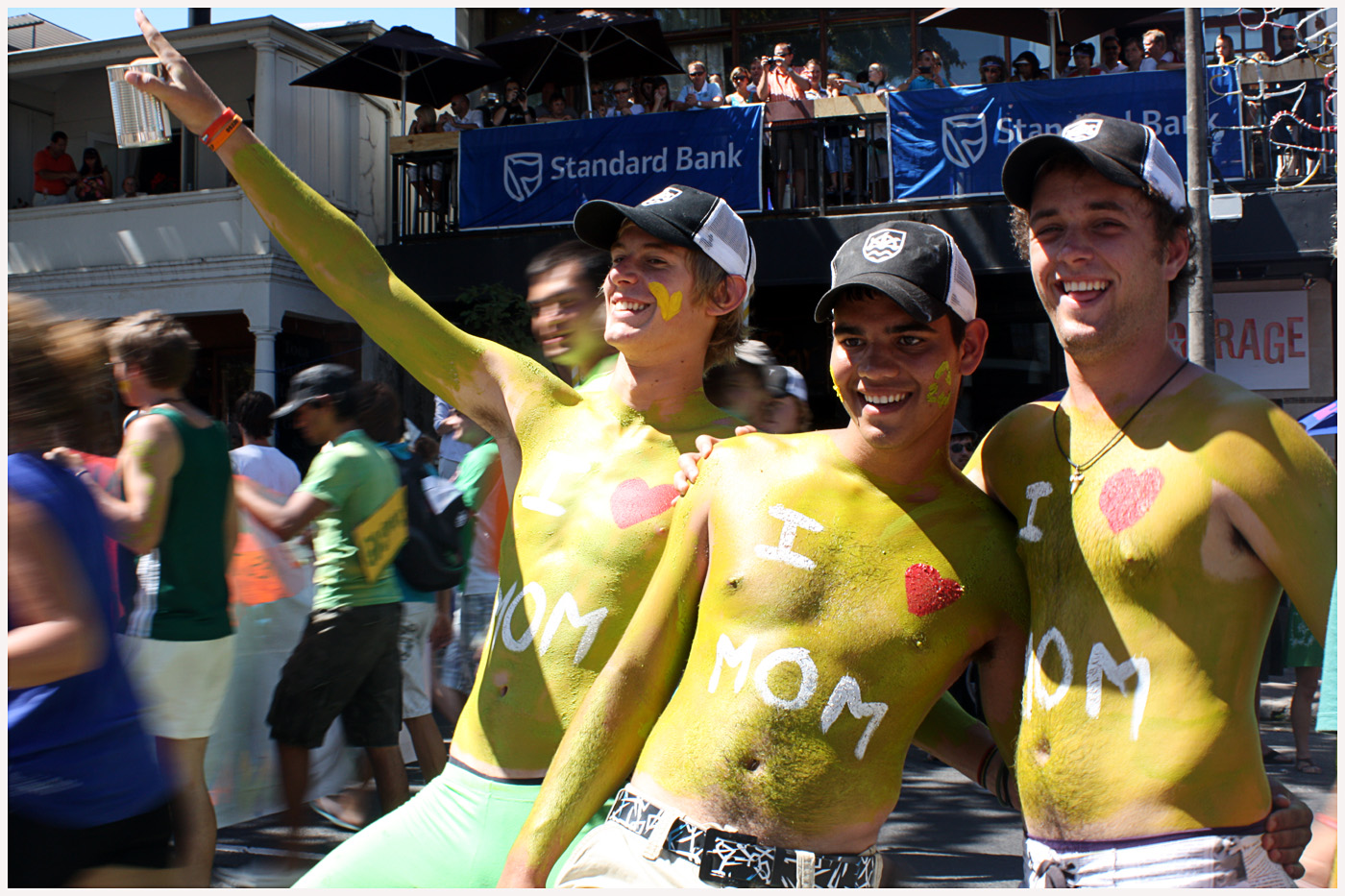


Wicus Leeuwner and JJ van Heerden Workshops
You are invited to join us in… Two 2010 Photographic Workshops! Come and meet old friends … or make new ones! with Wicus Leeuwner & JJ van Heerden Your choice of two workshops: Cederberg : Monday 19 April to Friday 23 April (less than 4 months away- secure YOUR place now!) Overberg : Wednesday 20 October to Sunday 24 October ” I will never forget the wonderful experience of your Cederberg workshop We were all inspired by a new understanding of photographic design and techniques. The organisation was superb with absolutely nothing forgotten!” Marianne – Durban Over the last twelve years the photographic workshops presented by Wicus and JJ have grown into highly sought-after photographic experiences in South Africa. Two passionate and creative photographers with a proven track record present the workshops. And the workshops are always fully booked! There are (pleasant) surprises in store for participants at each of the workshops… The workshops are aimed at photographers wishing to find a creative way of improving their photography by using artistic and design principles. Both beginner and experienced photographers will benefit. The workshops are presented in a relaxed, informal atmosphere, allowing individual freedom of expression. There is a combination of lectures, practical work and evaluation. ***The workshop fees include all accommodation, meals and teas. The all-inclusive cost of the Overberg workshop is R5500 per person and for the Cederberg workshop R6500 per person (R6000 single). This makes it amongst the most affordable of photographic courses in South Africa. Non-participants: R4100 per person – this includes all meals and accommodation. (You will also be most welcome to join the photographers on field outings and to attend the audio-visual shows in the evenings) A limited number of participants will be accepted. Due to the popularity of these workshops, early booking is essential! “Thanks for facilitating such a great course. I enjoyed every single moment ”. Renate – Cape Town Cederberg The four-star Mount Ceder Lodge is situated in a valley surrounded by the Cederberg and Koue Bokkeveld mountain ranges. Located on Grootrivier farm, across the main route through the Cederberg, approximately 95 km north of Ceres and south of Clanwilliam. The area offers peace and tranquillity, with beautiful scenery and a perennial river that flows through the farm. There is abundant opportunity for mountain climbing, bird watching, walking, horse riding, and mountain biking, fishing, canoeing and swimming in clear river pools. Lots of rock paintings to explore. Come and explore the spectacular rugged beauty of the Cederberg with us! This pristine wilderness area is known for the majestic rock formations and unrivalled plant life – a great venue for landscape photography. Overberg The Overberg workshop is presented at Volmoed, a retreat in the picturesque Hemel and Aarde Valley between Caledon and Hermanus. Accommodation is in rustic three-bedroomed stone cottages with a shared bathroom in each cottage. We provide single rooms for all participants, unless you would prefer to share. The retreat is situated in a secluded valley next to a mountain stream with beautiful pools and waterfalls along its course. The coastline in this area is the Cape’s most popular holiday destination with spectacular seascapes and tidal pools. During this time of the year the fynbos is in full flower and presents numerous photographic opportunities. On the other side of the valley the wheat harvest will be in full swing, creating spectacular geometric patterns over the rolling hills. The daily programme will consist of an early morning excursion, followed by brunch. After brunch participants view the photographs taken the previous day and select images for evaluation. Evaluation is followed by another excursion lasting until after sunset. *** Whale – Watching by boat! We work in conjunction with a highly-respected operator where the welfare and comfort of the whales comes first. As an optional extra we will arrange an early morning two-hour trip to photograph the whales in Walker Bay. It is a remarkable experience that you will treasure – even if you do not take a single picture! The fee for this will be a very reasonable R400. “Wicus and JJ, you have a rare talent to impart your knowledge and passion in a way which inspires and uplifts. Something that not many people today seem able or willing to do. I hope to have the privilege of joining you again for another workshop in the future”. Helen – Johannesburg Both workshops – What to bring: · Opportunities to use all your lenses will present themselves at the workshops, but a wide-angle zoom in the 28-80mm range and a telephoto zoom in the 70-300 range will be especially useful (if you have them). A sturdy tripod is essential for field instruction and careful composition. Polarizing filters for all the lenses is highly recommended. · Close-up equipment (see note at the end of this section). · A laptop to organise your images. If you do not have one, do try and borrow one for the duration of the course. We will assist you with working with your pictures. · Clothes for both hot and cold weather (and a jacket for the boat trip). The days are usually hot, but the evenings can get rather nippy. · Bedding is provided, but an extra towel comes in handy. · Raingear. (In the Cape you often experience three seasons in a single day!) · Comfortable walking shoes. While there is no serious hiking involved, the distances covered in the throes of photographic excitement can be considerable. Comfortable shoes or hiking boots will also reduce the risk of injury in rough terrain. * Headgear and sunscreen. · Note: The cost of close-up equipment scares a lot of people away from macro photography, which is a pity, as these workshops present some excellent macro opportunities. Fortunately, some inexpensive options do exist. Investigate close-up adapters, with a step-up ring to fit each of your lenses. They offer excellent quality and superb close-up facilities at 10% of the price of a macro lens. The normal close-up filters are not recommended, as the image quality is usually diabolical. Another option is to obtain a set of extension tubes. They are more expensive than the adapters, but offer better image quality. If you have any problems in obtaining any of the above equipment, or have any enquiries about equipment, you can contact JJ on (021) 883 3435 or 083 366 1515. “The venue and catering were superb for the purpose, and the learning experience for us was tremendous. Your teamwork in running an excellent quality workshop was first class”. Johann – Somerset West Do not delay – secure your place NOW! For bookings and further enquiries : please contact Johan van Zijl Tel/fax: 023 6251 593 johanvanzijl@telkomsa.net
Dance of Light Workshops 2010
Macro Photography
Dates: March… … … … 5, 6, 7
November… … … 5, 6, 7
Autumn in the Vineyards
Dates: June … … … … 4, 5, 6
Face to Face
Photographing people
Dates: March… … … 19, 20, 21
September … 10, 11, 12
Cost:R2950 per person with R1700 deposit.
This includes meals.
Venue: “33 STELLENBOSCH”
CONTACT Nicole or Eric Palmer:
NICOLE PALMER ERIC PALMER
082 5105 694 082 697 9946
www.nicolepalmer.co.za www.flickr.com/photos/ericpalmer
http://nicole-palmer.blogspot.com http://afreakin.blogspot.com
www.desertlight.co.za adrenalinstar@hotmail.com
082 5105 694 082 697 9946
www.nicolepalmer.co.za www.flickr.com/photos/ericpalmer
http://nicole-palmer.blogspot.com http://afreakin.blogspot.com
www.desertlight.co.za adrenalinstar@hotmail.com
15 Tips for Low Light Landscape Photography
Capturing scenes in low light remains one of the most challenging aspects of photography, yet the results when executed well can be truly captivating. Whether it’s an energetic cityscape or ethereal seascape the possibilities are endless. Here are a few essentials points to consider before you begin.
Sending images from your Mac
If you’ve been having trouble with submitting images from your Mac; images being resized and so forth; take a look at this new article in our How To section.
Upcoming Workshops
Are you interested in learning something new? Here’s a list of the workshops being offered in February by the Cape Photographic Company.
Black & White in Photoshop Elements
At the last meeting I demonstrated the use of the Enhance > Convert to Black and White… tool for converting images to black and white. While this tool is still a perfectly acceptable way of doing this, I have since discovered this tutorial that uses a different, in many ways better technique for this.
If you would like a refresher on the demonstration I gave, there is a two-part video tutorial here that you can take a look at. Please note though that this video uses Photoshop Elements 5 and the conversion dialog has changed since then, with the thumbnails for adjusting red, green and blue channels, as well as contrast being replaced with slider controls.
The other technique I demonstrated was how to retain only selected areas in colour while converting the image to black and white. This tutorial demonstrates how to do that as well as revealing some other ways of doing the black and white conversion.
 Helderberg Photographic Society